Picture this: your karate school has always had full attendance at back-to-back beginner classes on Monday evenings. But lately, you’re noticing more open spots and starting to wonder if it makes sense to combine two classes into one. Or maybe your afterschool tutoring program once kept a waitlist, but this semester you scaled back your offerings because fewer students registered. If you've noticed declining enrollment, you're certainly not alone, and there are ways to reverse it.
Enrollment can slip for many reasons. In much of the United States, a declining birth rate means there are simply fewer school-age children than there were a decade ago. Additionally, families have more choices than ever for afterschool enrichment, from sports leagues and music lessons to coding clubs and art studios. Even so, there are plenty of ways to reach families and increase enrollment in your program.
In this guide, we'll explore steps that your afterschool program can take to overcome declining enrollment. We'll cover:
- What You Need to Increase Enrollment
- 8 Enrollment Marketing Strategies to Boost Registrations
- Enrollment Marketing FAQs

What You Need to Increase Enrollment
Increasing enrollment in your afterschool sessions begins with understanding where your program fits among the other opportunities available to families in your area. Before you ramp up your marketing efforts, you’ll need:
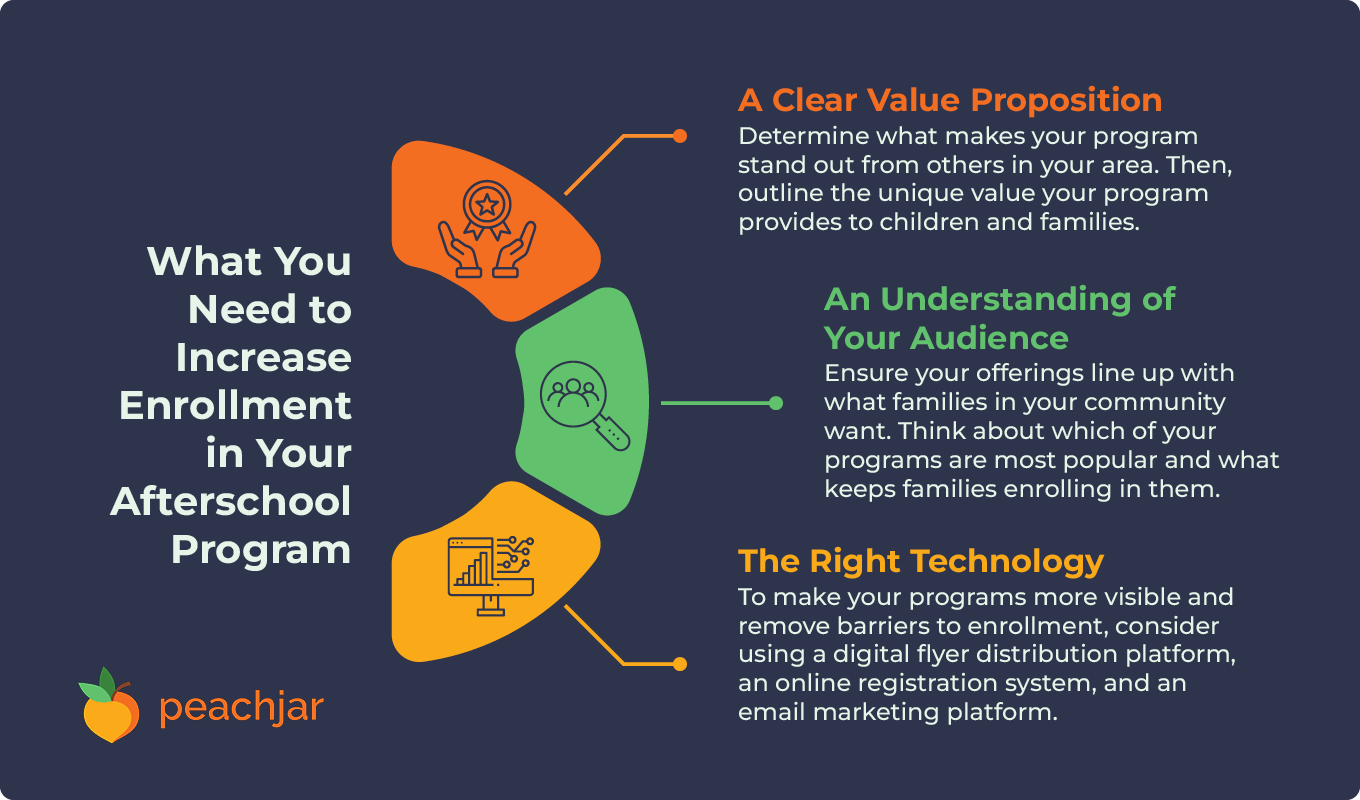
A clear value proposition
To convince local families to enroll their children in your program, you should be able to articulate what makes it special. Begin by researching organizations in your area with similar offerings, and look at their areas of instruction, schedules, pricing, and the way they position themselves. Then think about where your program stands out. Perhaps your instructors are certified teachers, you offer small class sizes, or your hours accommodate parents who don't finish work until after five o’clock.
Next, outline the unique value your program provides for children and their families. The more specific you are, the better. Something like "we help kids have fun" could describe nearly any program in town, while "we help fourth and fifth graders build confidence in math through small-group tutoring" gives families something more concrete to remember.
An understanding of your audience
You'll also need to make sure your offerings line up with what families in your community want. To do this, think about which of your programs are most popular, what keeps families enrolling in them, and what the families who sign up have in common. For instance, are your sessions most popular with working parents? Or with families who have multiple children?
Knowing more about the families who gravitate toward your programs can help you tailor your offerings to make them even more appealing. If you encounter a lot of working parents, you might emphasize flexible pickup times. If siblings often join together, you could offer discounts for families enrolling more than one child at a time.
The right technology
In an increasingly online world, it helps to meet parents where they are. While paper flyers and word-of-mouth referrals are still effective, relying on these channels alone may mean you miss the families who get most of their updates on their phones or in their inboxes.
To make your programs more visible and remove barriers to enrollment, consider using:
- A digital flyer distribution platform. A platform that connects with school districts puts your programs in front of families in your community who might not know about them yet. Going through district approval also boosts your flyers’ credibility and delivers them to a place parents already check regularly: their school district's digital flyerboard.
- An online registration system. Families should be able to sign up from home, not just at your office’s front desk. Link to your registration page in every communication you send to families so they can register as soon as they’re ready.
- An email marketing platform. Email helps you encourage families to re-enroll their children and keeps them informed about important updates, deadlines, and discounts.
Ideally, these systems should work together. For example, you can include registration links in your digital flyers, and your registration system can connect to your email platform so families who consent to digital communications are automatically added to your mailing list.
8 Enrollment Marketing Strategies to Boost Registrations
1. Refine your messaging.
Encourage enrollment by communicating the unique benefits of your program to the families you hope to reach and providing a clear next step to register their child.
Include the following elements in your communications:
- Logistical information. Any flyers or emails you send should cover the same basic information, such as your address, contact information, the dates and times of your programs, and any age limits or experience requirements.
- What students and families will get out of your program. Express your program’s benefits for both children and their families. Children might build new skills, make friends, or finish a project they're proud of, while parents gain reliable supervision after the school day ends.
- How to take action. Interested families should be able to register online right away. Include calls to action in your digital flyers and emails, such as a "Register now" button, so parents can click straight from your communications to a sign-up page.
Keeping your messaging consistent across communications channels will help you build awareness and recognition over time. When families see the same description of your program on a flyer, in emails, and on your website, it becomes easier for them to remember and recommend to others.
2. Solidify your branding.
A consistent visual style across any marketing materials and communications that families see makes your organization more recognizable. It also establishes trust by assuring parents that the messages they receive are legitimate communications from your organization.
To create a consistent brand style, select your signature fonts and exact colors and decide which version of your logo you'll use in your materials. Document these visual elements in a brand style guide that your team can use as a reference to create flyers, social media posts, and updated web pages.
3. Start early.
Timing shouldn't stand in the way of your enrollment. Busy parents plan their calendars weeks or even months ahead, so give them plenty of time to enroll their children before your registration window closes. That way, interested families can plan around your programming rather than trying to fit it into a schedule that’s already packed.
A longer window also gives families time to ask your team questions, such as what to bring on the first day or whether a sibling can join. The sooner you open registration, the more chances you have to answer those questions and turn interest into sign-ups.
4. Offer incentives.
Some families will be on the fence about enrolling their children in your programs, and an appealing offer can give them the final push they need to register. Incentives also give you an advantage over organizations in your area that offer similar programs.
Consider incentives like:
- Free trials. A free session or two can help families confirm whether your program is right for their children before they make a financial commitment, making them feel more comfortable with their decision.
- Early registration discounts. Offering a discount to families who register their children before a certain date creates a sense of urgency and makes your program more enticing. It also helps you increase enrollment and gives you a more accurate headcount well before your first session.
- Volunteer hours. If your afterschool program includes community service, you can appeal to students who need volunteer hours. Many large nationwide organizations, such as Beta Club and National Honor Society, have service requirements, which your program can help students meet.
Any incentives you offer should feel mutually beneficial. Families get a great value, and your team gets the commitment it needs to plan ahead and provide a fun, enriching experience for students.
5. Lean on relationships with local districts and schools.
Getting involved with districts and schools in your area can help you build visibility and trust with local families. Strengthen your connections with districts and schools through:
- District-approved communications. If you aren't connected with local districts yet, sending your digital flyers through a platform with district approvals is a relatively low-lift place to start. Once a district approves your flyer, it reaches families who might not have heard about your program otherwise.
- Hosting events with local schools. Your organization might host a community service event for students from a nearby school or sponsor part of an existing school event, such as a culture night or fun run. This gives your organization a chance to build relationships in your community, and families can meet your team in person before deciding whether or not to enroll their children in your afterschool program.
- College- and career-readiness opportunities. Emphasize how your programs help prepare students for college and the workforce by building strong study habits or leadership skills. You might even partner with schools to offer internship opportunities for older students.
As you approach schools and districts, center students in the conversation. Explain how your programming will help improve academic and behavioral outcomes, drawing from any relevant statistics that might strengthen your case.
6. Tell a compelling story.
A coherent narrative about your program can also encourage enrollment. Discuss your organization's story and mission, covering what drove you to offer afterschool programming, who you serve, and what you believe children can gain from your programs. Families are more likely to trust your organization when they know the people and purpose behind it.
Then show how your programming has helped students. With families' permission, include testimonials and success stories in your communications to establish credibility and appeal to prospective families’ emotions. For example, a quote from a parent saying that their child gained confidence through your dance program can make a stronger case for your organization’s work than a description of your ballet classes alone.
Examples of children's achievements can also create a compelling case for your program. If families are comfortable with it, you can share examples of outcomes, capstone projects, or final showcases, such as a recital video or photos from a student science fair. These details help parents picture what their own children could accomplish.
7. Make registration simple.
Remove as many barriers to registration as you can. Offering online registration is a strong start, but you should also ensure the process is mobile-friendly and accessible so any parent can enroll from any device. Many families will open your registration link on smartphones, so try filling out the form on your own phone before you share it.
As you create your registration form, decide which questions and fields are absolutely necessary and which you can leave out. While you'll likely need a child's name, age, parents’ contact information, and health or allergy details up front, something like a T-shirt size can likely wait until after registration. A shorter form helps you gather the information you need without asking busy families to spend too long filling it out.
8. Keep retention in mind.
Increasing enrollment becomes much easier when the families who already participate in your program choose to re-enroll. They’re familiar with your schedule and their children get out of each session, so they are often more likely to sign up than families who are just hearing about you for the first time.
To keep families returning to your afterschool program, make them feel special with personal communications. For instance, an instructor might send a quick note about a child's progress with a new skill, or a director might email a thank-you after a showcase. You can also give families a chance to share feedback with a survey at the end of each season. When parents see that you listen to their suggestions and act on them, they are more likely to feel invested in your program.
You may also choose to offer a small discount for current participants to make re-enrolling even easier. A returning-family rate shows your appreciation for those who have supported you and gives them a reason to register early.

Enrollment Marketing FAQs
How can I track the results of my organization’s marketing efforts?
To track the results of your marketing efforts, start with the engagement analytics in your digital flyer distribution platform and email marketing system. These tools show how your communications are landing with families by tracking metrics on deliveries, views, and actions taken, which you can then compare against your registration data.
Over time, you'll spot trends about which messaging resonates with your audience, such as whether flyers that mention a free trial get more clicks than those that mention a discount.
How can I reach families in multiple school districts?
You can reach families in multiple districts by using a digital flyerboard platform that connects to multiple districts in your area. It also helps to establish relationships with several nearby districts and their PTO/PTA organizations, since those groups are often eager to share opportunities from trustworthy local organizations.
If you want to recruit participants from multiple districts because you have more than one location, you may also consider creating location-specific landing pages on your website to provide accurate information about the address, schedules, and registration process for each one.
Which is a better choice for increasing enrollment in afterschool programs: print or digital flyers?
You can use both, but digital flyers are generally the stronger choice. After they’re approved, you can post them to school districts' digital flyerboards, track their performance, and reach schools that have gone paperless. Digital flyers also make registration easier. Clicking a call to action creates a smoother experience for parents than scanning a QR code or typing in a URL from a print flyer.
How can I encourage working parents to enroll their children in my afterschool programs?
You'll be most successful in encouraging working parents to enroll their children when you emphasize offerings like pickups from school and work-friendly hours, provide programming five days a week, and provide an easy online registration experience. These details show families you’re committed to making their lives easier, rather than giving them more to juggle.
Drive Registrations for Your Afterschool Program With Peachjar
You can increase enrollment in your afterschool program by sharing a well-crafted message with local families and using technology to streamline the process. Your best results will likely come from distributing approved communications through the school districts in your area, since families already look to those channels for information they can trust.
Peachjar is a reliable flyer distribution platform that enables community organizations to create digital flyers, upload them for district approval, and share them to district flyerboards and parents' inboxes. You can also add clickable calls to action so families can register straight from your flyer.
Along the way, you'll see insights about how your flyer is performing, so you can learn what families respond to and refine your next message. When you're ready to reach more families in your community, Peachjar can help you get your program in front of them.